


Why Your Website Isn’t Ranking — Even If It Looks Great
Subscribe to our newsletter
Keep up with the latest news in the digital marketing arena with Klik Digital. Subscribe Now!

It is one of the most frustrating conversations in digital marketing. A business owner sits across from a strategic partner and asks the inevitable question: “We spent so much on this. Why aren’t we on page one?”
The answer is often uncomfortable. In the eyes of a search engine and in the logic of Large Language Models (LLMs) beauty is entirely secondary to utility, structure, and technical transparency. To a human, your website is a brand experience. To a crawler, it is a series of data relationships, response codes, and semantic signals. When a website is not ranking, it is almost never because the “vibe” is wrong. It is because there is a fundamental disconnect between the visual layer and the architectural layer.
Klik Digital views SEO not as a finishing touch, but as the blueprint. If you build a mansion on a swamp, the crown molding won’t keep the foundation from sinking. Here is the reality of why “pretty but shallow” websites fail in 2026.
Design Quality vs. Search Performance: Two Different Languages
We must first reconcile a difficult truth: Google does not care if your website is beautiful. To understand why aesthetics don’t translate to traffic, we have to look at how a visitor experiences a site versus how a search engine processes it.
What a human sees as a feature, a crawler often sees as a friction point. For example, that stunning high-resolution video background in your hero section might captivate a visitor, but to a crawler, it is often just a massive, unoptimized file that drags down your “Largest Contentful Paint” and labels your site as sluggish.
Similarly, the minimalist “hamburger” menu that keeps your design uncluttered effectively hides your site’s hierarchy from search bots. This prevents the flow of internal link equity and makes your most valuable sub-pages nearly impossible for an engine to discover.
The disconnect continues into your messaging. Punchy, “vibe-focused” sentences might resonate in a boardroom, but to a search engine, they represent “thin content.” Without topical depth or recognizable entities, your brand remains a mystery to an AI system looking for a knowledge graph to index.
Finally, while complex, JavaScript-driven animations create a sophisticated feel for the user, they can function as indexing roadblocks. Crawlers rarely wait for your sophisticated code to fully render, often leaving them with a blank or incomplete view of your page.
The disconnect stems from the fact that search engines and AI systems (like Search Generative Experience) evaluate websites based on binary logic and semantic relevance, not artistic intent.
How Search Systems and AI Evaluate Your Site in 2026
By 2026, the criteria for ranking have shifted. We are no longer just optimizing for keywords. We are optimizing for entities and relationships. When an AI search engine crawls your site, it is looking for a “Knowledge Graph.” It wants to know:
- Who are you? (Authority)
- What do you know? (Topical Depth)
- Who can you prove it to? (Trust)
A visually driven site often prioritizes a “clean” look, which usually means removing the very text and structured data that these systems need to categorize your brand. If your site looks like a digital art gallery but lacks a clear hierarchical map, the AI will simply skip over you in favor of a competitor who provides clearer “data nourishment.”
1. The Search Intent Misalignment
The most common reason for search visibility issues is that the page being showcased doesn’t match the intent of the user’s query.
Imagine you are a boutique law firm. You have a beautiful “Services” page with a single paragraph about Workers’ Comp. You want to rank for “how to file a workers’ comp claim in Baltimore.”
Even if your site is gorgeous, you will never rank for that query. Why? Because the user’s intent is informational (they want a guide), but your page is transactional (you want to sell a service). Google’s job is to give the user what they asked for. If the search results are filled with 2,000-word guides and you are offering a “Contact Us” form, your design is irrelevant. You have failed the intent test.
2. The Trap of “Thin” and Visually Driven Content
In 2026, “thin content” is the silent killer of rankings. To maintain a specific aesthetic, many modern designers push for “minimalist” layouts—three-word headings, tiny blurbs, and lots of white space.
While this looks great on a mobile device, it provides zero topical depth.
Topical Authority: Search engines rank experts, not just pages. To rank for a competitive term, you need to show you understand the entire ecosystem of that topic.
The Design Conflict: Designers often hate “walls of text.” However, without that text, you aren’t providing enough “entities” (related concepts) for a search engine to understand your expertise.
The Klik Approach: We bridge this gap by using “Expanding UI” elements—accordion folds, “read more” toggles, and integrated sidebars—that allow for high word counts and topical depth without cluttering the visual experience.

3. The Invisible Technical Layer: What You Can’t See Is Killing You
Your website could be a work of art, but if the code is a mess, it’s invisible to the world. Technical SEO issues are the most common “hidden” reasons for a lack of traffic.
Crawlability and Indexing: If your site uses a complex JavaScript framework (like some versions of React or Vue) and isn’t configured for Server-Side Rendering (SSR), search engine bots might see a blank page. They don’t wait for your beautiful animations to load; they grab the initial HTML and move on. If that HTML is empty, you don’t exist.
Core Web Vitals and Performance: Google’s “Page Experience” signals are a tie-breaker. If your site is “heavy”—meaning it has unoptimized 4K images or too many third-party scripts—it will feel sluggish.
· LCP (Largest Contentful Paint): How fast does the main content load?
· INP (Interaction to Next Paint): How fast does the site react when a user
clicks?
If your “stunning” site takes 5 seconds to become interactive, you are being penalized before the user even sees your logo.
4. Missing Structured Data (The AI Translator)
In the age of AI search, Structured Data (Schema Markup) is no longer optional. This is code that tells search engines exactly what they are looking at. If you have a page about a product, you need Schema to tell the AI: “This is a product, here is the price, here is the availability, and here is the average rating.” Without this “architectural layer,” AI systems have to “guess” what your content is. In 2026, if an AI must guess, it will simply move on to a site that provides a clean data string.
Your design is for the humans; your Schema is for the machines.
5. Broken Hierarchy and Internal Linking
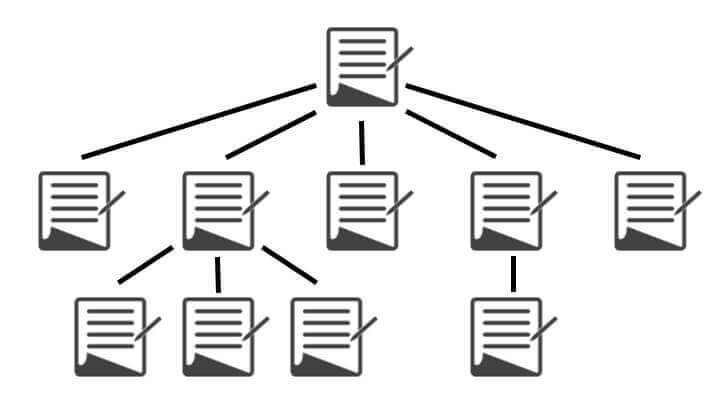
A common design mistake is “flattening” the site. To keep the menu clean, designers often hide deep pages or fail to link between related topics.
Internal linking is the “blood flow” of SEO. It tells Google which pages are the most important. If your most valuable “Money Page” is five clicks away from the homepage and has zero internal links pointing to it, Google assumes it’s unimportant regardless of how well it’s designed.
What to Fix First: A Strategic Priority List
If your site looks great but isn’t ranking, don’t panic. You don’t necessarily need a new design; you need an architectural intervention.
1. Run a Technical Audit: Check for indexing errors, 404s, and excessive JavaScript bloat. Ensure search engines can actually “read” your content.
2. Audit for Intent: Look at the top three results for your target keywords. Do they look like your page? If they are long-form blogs and you are a landing page, you need more content.
3. Beef Up Topical Depth: Add FAQs, long-form guides, and “Knowledge Hubs” to your site to prove authority.
4. Implement Schema Markup: Use a tool or a partner to add a robust layer of structured data across your entire site.
5. Optimize Performance: Compress those images, defer non-essential scripts, and move to a high-performance hosting environment.
Identify What’s Holding You Back
At Klik Digital, we don’t just build sites that look good. We build sites that perform. We understand that your website is a business tool, not just a digital brochure. If you’ve invested in a beautiful design but aren’t seeing the ROI in your traffic logs, it’s time to look under the hood.
Want us to run a strategic SEO and technical audit on your current site to find the invisible walls blocking your growth? Book your session with Klik Digital expert today!
FAQ
Professionalism is a conversion signal, not a discovery signal. Lack of traffic usually points to a lack of “topical authority,” poor technical foundations, or a failure to align with search intent.
Yes, but mostly through performance (speed) and user behavior (dwell time). If a design makes it hard for a bot to crawl or for a user to find information, it will hurt your rankings.
In extremely low-competition niches, perhaps. But in 2026, with the rise of AI-driven competition, “accidental” rankings are a thing of the past. You need intentional architecture.
Technical fixes (like indexing) can show results in weeks. Content and authority building (topical depth) usually take 3 to 6 months to see significant movement.
