


Why Isn’t SEO Working for Us Yet? — Here’s a Common Pattern
Subscribe to our newsletter
Keep up with the latest news in the digital marketing arena with Klik Digital. Subscribe Now!
There is a specific kind of professional frustration experienced by executives who invest in digital marketing: watching a competitor rank #1 for a high-value search term while your own company—with a better product, a stronger reputation, and a bigger content budget—is buried on Page 3.
We see this frustration quite often. A CEO or CMO will approach us with a stack of reports, saying, “We’ve done everything the experts told us. We’ve hired writers. We’veoptimized our service pages. We’ve been posting weekly blogs for six months. Why isn’t our traffic moving?”
It’s a question born from the “Activity Trap.” In marketing, it’s easy to confuse being busy with being effective. When you are putting in the effort but not seeing the results, the issue is seldom a lack of work. It’s a lack of clarity.
Klik Digital has identified a specific pattern that defines this stagnant phase. If your SEO efforts stall, you are probably missing one of three fundamental “invisible hurdles.” Here is how to identify them—and how to finally unlock months of built-up momentum.
The Myth of the Slow, Steady Line
You’ve likely heard, “SEO is a marathon, not a sprint.”
While there is truth in that—building authority takes time—this phrase is often used to excuse a lack of strategy. Business owners expect their SEO growth to look like a neat, diagonal line going up. However, successful SEO growth often looks more like a staircase. You plateau for a long time. You invest. You optimize. The line remains flat. Then, you solve a fundamental “blockage,” and you jump. You plateau again at a higher level, then you jump. The “jumps” usually happen not when you add more content, but when you unlock the potential of the content you already have. Frustration occurs when you are stuck on a plateau and your only strategy is to “push harder.” If the car won’t start, pressing the gas pedal harder won’t help. You need to look under the hood.
Visible Effort, Invisible Hurdles: The Three SEO Logjams
If your high-quality content isn’t ranking, it’s because a strategic or technical hurdle is trapping its value. In our hands-on work with businesses in healthcare, legal, and enterprise environments, we’ve found that these “logjams” usually fall into three categories.
1. The Broken Foundation: Technical SEO Is Blocking You
You can have the most brilliant professional insights or medical advice on your site, but if the page takes four seconds to load, Google simply won’t trust you with their users. Google’s algorithm doesn’t read your content the way a human does. Before it can assess your expertise, its “bots” must crawl and index the page. If your site code is messy, your images are unoptimized, or your server is slow, these bots get “stuck.”

Real-World Example: Mid-Atlantic Rheumatology
When we worked with Mid-Atlantic Rheumatology, a trusted medical practice, we didn’t start by writing more blogs. We started by making the site work better.
By optimizing the technical core, we pushed their Google PageSpeed score to 90+ on desktop. To a human, the difference between a 2-second and a 4-second load might feel minor. To Google’s algorithm, it’s a binary choice between “High Quality” and “Poor Experience.”
Fixing the foundation acts as the “green light” for the rest of your strategy. Suddenly, the blogs you wrote six months ago start ranking because the platform they sit on is finally solid.
2. The Lost User: Structural Clarity and the Path to Conversion
Imagine building a world-class library but forgetting to put the books in the card catalog. No matter how valuable the information is, no one can find it because there is no path. A company might have deep, informative service pages, but they are buried three clicks deep in the menu, with zero links pointing to them from high-traffic blog posts.
This creates two massive SEO problems:
- Google Gets Lost: Internal links are like a “map” for search engines. If no other pages link to your main service page, Google assumes that page isn’t important.
- Users Get Lost: This leads to “Dead-End Content.” A user finds your blog via search, reads it, and… that’s it. There is no clear next step.
The AC&NC Model: Guiding the Path
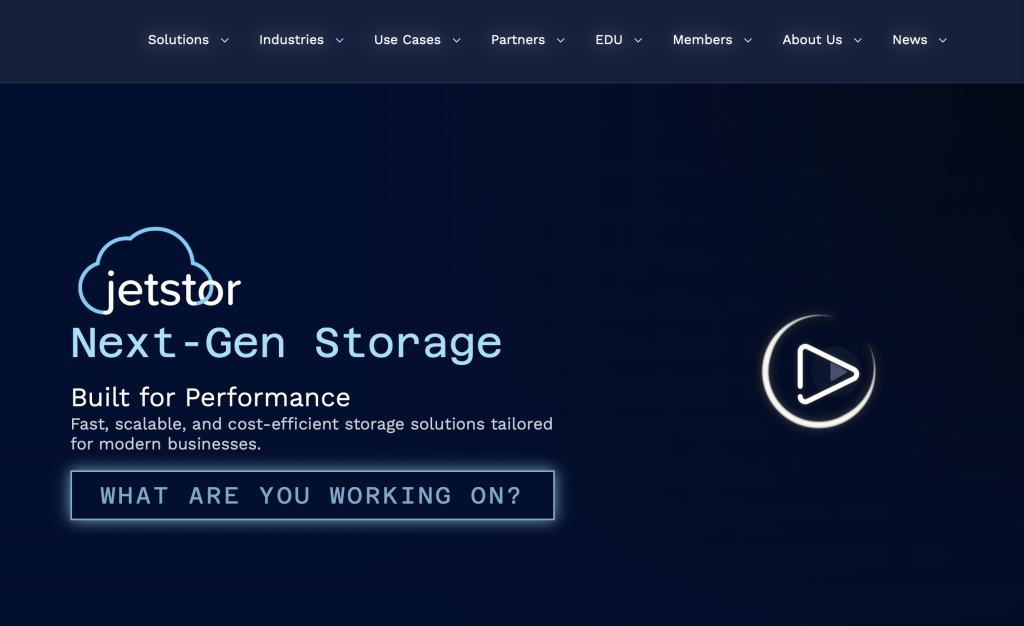
Look at our partnership with AC&NC (JetStor). For over two decades, they’ve provided elite data storage solutions. When we took over their strategy, we didn’t just want more keywords; we focused on the User Journey.
We created clear pathways from their blog content to their specialized service pages. The result of this structural clarity was a:
- 541% increase in organic users.
- 23% increase in average session duration.
People weren’t just landing and leaving. They were following the paths we built. That increased “dwell time” tells Google your site is valuable, which leads to higher rankings across the board.
3. The Mismatched Intent: Solving the Wrong Mystery
Sometimes the hurdle isn’t technical or structural. It’s linguistic. You might be targeting the term “business transformation consulting.” You use the phrase fifty times on your page. But your ideal customers are actually searching for “post-merger integration audit.”
By failing to align your language with the user’s search intent, you solve a mystery that no one is trying to crack. Google sees that your page is a “vague” answer to a broad question rather than the “perfect” answer to a specific one.
We have seen a single H1 header change—aligning the main title of a page with real-world search intent—move a stalled page from the bottom of page 2 to the top three results in less than a month.
Why “More” Isn’t Always the Answer
When a CEO is frustrated that SEO isn’t working, the subconscious reaction is almost always to “do more.”
- “We need five blogs a week instead of one.”
- “We need to target 100 more keywords.”
- “We need to redesign the entire homepage.”
This is like trying to fix a leaky pipe by turning up the water pressure. It won’t solve the leak; it will just waste more water (and budget).
The 80/20 is the foundation of our approach. We believe that 80% of your results come from 20% of the right changes. We don’t start by adding content yet; we start by auditing. Look for the “logjam”, the one or two technical, structural, or intent-based blocks that are preventing your previous work from finally paying off.
How to Get SEO Unstuck Today
If your rankings have plateaued, stop the content treadmill and ask yourself these three “Clarity Questions”:
- Is the foundation cracked? Run a Google PageSpeed test. If you’re in the red or orange, that’s your logjam. Fix the code before adding more content.
- Are the doors locked? Check your internal links. Does every important page on your site have a clear path (a link) leading to it from your high-traffic pages?
- Am I speaking the right language? Look at your Search Console data. Are people finding you for specific, long-tail terms you didn’t expect? If so, update your main headings to match those terms.

SEO Success Is Closer Than You Think
The “overnight success” stories you see—like the significant rise in organic sessions we achieved for AC&NC—are rarely about luck or secret algorithms. They are simply the result of an experienced partner finding the one small change that unlocks the dam.
Whether it’s a technical speed boost, like the one realized by MidAtlantic Rheumatology, or a structural revamp, the goal is always the same — clarity. Don’t abandon your strategy because it hasn’t worked “yet.” Look deeper, find the invisible hurdle, and unlock the momentum you’ve already built.
Ready to Find Your “One Small Change”?
If your marketing feels busy but is going nowhere, it’s time for a new perspective. Klik Digital specializes in helping service-based businesses in healthcare, law, accounting, and other industries find the invisible hurdles that are trapping their growth. Let’s talk!
FAQ
It varies. Technical fixes (like fixing broken code or an incorrect ‘noindex’ tag) can sometimes show results in days. Structural changes or intent-based heading updates typically take 2 to 4 weeks for Google to “crawl,” process, and re-rank the page.
Absolutely. Think of it like this: If your site is invisible to Google because its load speed is too slow, fixing that speed doesn’t just improve one page—it makes your entire sitevisible for the first time. That creates an immediate, major impact on your traffic.
A redesign isn’t just about “looks.” It usually involves moving to a faster theme, using cleaner code, improving mobile responsiveness, and creating a more logical menu structure. These are all high-value signals that Google rewards with higher rankings. We saw this pattern with Hope Children of Ukraine, where site structure improvements led to a +30% increase in session duration.
You need both, but unbranded terms provide the growth. You should always rank #1 for your own brand name, but true “discovery” happens when someone who has never heard of you searches for a problem they have (e.g., “Chicago business litigation attorney”) and your firm appears. That is how you acquire new customers.
In 2026, fixing old content often yields a much higher ROI. Updating a page that is already on Page 2 or 3 and moving it to Page 1 is much faster and more impactful than writing a new post and waiting for it to build authority from scratch.
