


Traffic Problems Don’t Always Start in Google
Subscribe to our newsletter
Keep up with the latest news in the digital marketing arena with Klik Digital. Subscribe Now!
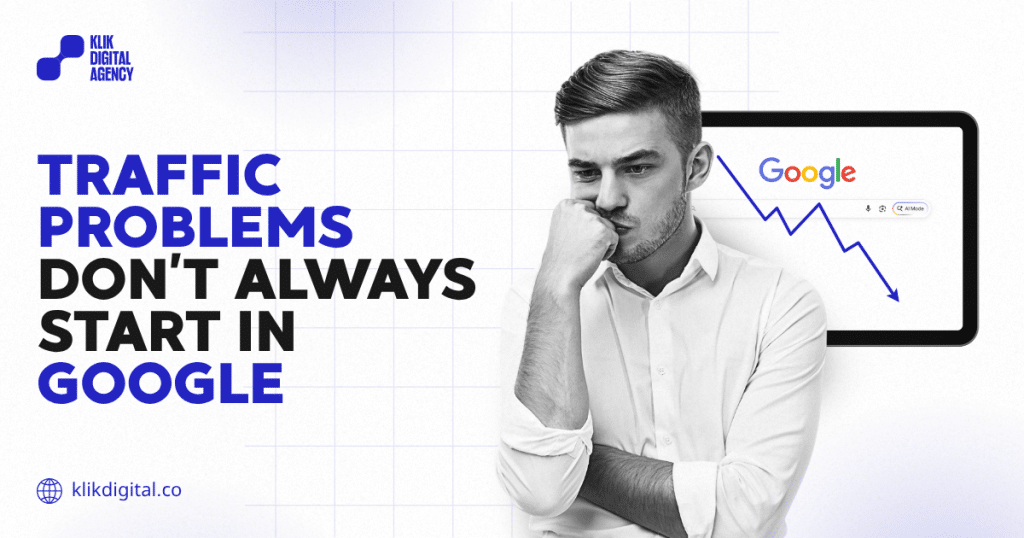
In digital marketing, a decline in website traffic often triggers an immediate assumption: a search algorithm change is to blame. Teams review updates, adjust keywords, and reassess content strategies.
However, in complex digital environments, traffic loss is rarely caused by a single factor. Based on Klik Digital’s experience across industries—from legal to healthcare—many traffic issues originate outside of search engines.
Traffic declines are frequently driven by technical performance, platform dynamics, inconsistent brand signals, or inaccurate data tracking. Focusing exclusively on SEO can delay identifying the real issue.
Below are four key non-Google factors impacting website traffic in 2026—and how to address them.
1. Interaction to Next Paint (INP) and User Experience Performance
Page speed is no longer a general benchmark—it is measured through specific interaction metrics. One of the most critical is Interaction to Next Paint (INP), which evaluates how quickly a page responds to user actions.
Even if a page appears fully loaded, delays in interaction (clicks, form inputs, navigation elements) can negatively impact user experience and search performance.
Business Impact:
A healthcare client maintained top search rankings for high-value keywords but experienced a decline in traffic. The issue was traced to delayed response times within a patient portal integration. Users encountered friction when attempting to book appointments, leading to increased abandonment rates.
Outcome:
Poor INP performance was reflected in Chrome User Experience data, followed by a drop in rankings.
Key Takeaway:
Technical performance directly affects both user behavior and search visibility. Optimizing code efficiency, reducing JavaScript load, and improving server response times are critical.
2. Platform Dynamics and Declining Social Referral Traffic
Social platforms continue to prioritize content that keeps users within their ecosystems. As a result, posts containing external links receive reduced visibility.
Organizations relying on social media for referral traffic are seeing measurable declines.
Observed Trend:
Across multiple clients, decreases in website traffic were linked to reduced social referrals rather than SEO performance.
Strategic Adjustment:
Shifting to a native content strategy—publishing insights directly on platforms in formats such as carousels and short-form video—improves reach and engagement.
Result:
While referral traffic from social platforms may decrease, brand-driven searches and direct traffic increase as audience trust grows.
Key Takeaway:
Sustainable traffic growth requires building brand recognition, not relying solely on external link distribution.
3. Brand Consistency and the Trust Gap
Users increasingly validate brands across multiple sources before engaging. Inconsistent messaging across platforms creates friction and reduces conversion likelihood.
This includes discrepancies between:
- Website content
- Business listings
- Social media presence
- Third-party review platforms
Business Impact:
For organizations operating in high-trust industries, such as healthcare, legal, finance, or supply chain, inconsistencies can affect both traffic and revenue.
Strategic Approach:
Maintaining consistent messaging, credentials, and positioning across all digital touchpoints ensures credibility and improves user confidence.
Result:
Improved engagement metrics and stabilization of mid-funnel traffic, as users are more likely to continue their journey once trust is established.
Key Takeaway:
Consistency across the digital ecosystem is essential for maintaining user trust and sustaining traffic.
4. Data Integrity and Tracking Gaps
Inaccurate or incomplete tracking can misrepresent actual traffic performance.
Common issues include:
- Misconfigured analytics tools
- Broken or missing tracking tags
- Cookie consent mismanagement
- Lack of server-side tracking
Business Impact:
Organizations may interpret tracking gaps as traffic loss, leading to incorrect strategic decisions.
Case Insight:
A global organization reported a significant drop in organic traffic. A technical audit revealed that tracking scripts were blocked due to a consent configuration update. Once resolved, reported traffic returned to expected levels.
Key Takeaway:
Accurate measurement is foundational. Without reliable data, performance analysis and optimization efforts are compromised.

Why Smarter Investment Outperforms Higher Spend
Increasing paid media budgets does not resolve underlying technical or strategic issues. Without addressing performance, trust, and data accuracy, additional spend delivers diminishing returns.
Klik Digital’s approach focuses on architecting sustainable growth through:
- Technical optimization: Optimizing performance, UX, and infrastructure.
- Cross-channel brand alignment: Implementing with consistency across all touchpoints.
- Proactive auditing: Identifying risks before they impact performance.
Traffic declines are rarely caused by a single factor. Addressing them requires a comprehensive view of performance, brand consistency, platform strategy, and data accuracy.
Focusing only on search optimization limits visibility into the broader system influencing results.
Ensure your digital strategy is built on accurate data, strong performance, and consistent brand presence.
Contact Klik Digital for a Comprehensive Online Presence Audit and identify the factors impacting your traffic before they affect your revenue.
FAQs
Review click-through rate (CTR) and search result presentation. Low engagement may indicate ineffective metadata or stronger competitor positioning.
Compare server logs with analytics data. Discrepancies typically indicate tracking issues rather than actual user decline.
Yes. Server performance, DNS response times, and SSL stability all influence search visibility and user experience.
As search experiences evolve, direct traffic reflects strong brand recognition and user intent, making it a critical long-term asset.
