


Traffic Is Changing in 2026 — Here’s What We’ve Been Seeing Across Projects
Subscribe to our newsletter
Keep up with the latest news in the digital marketing arena with Klik Digital. Subscribe Now!
Your traffic is down. Your conversions aren’t. That’s not a glitch, it’s a signal that the rules of digital growth have changed.
For years, growth followed a predictable rhythm: publish content, climb rankings, increase traffic, and eventually see more leads. That “staircase” model made sense when search behavior was mostly reactive and algorithms rewarded volume. But now, that staircase has been rebuilt.
The steps are no longer in the same places. Some are steeper, some are missing entirely, and new ones are emerging where most teams aren’t looking. At the same time, the type of visitor being sent your way is changing. Instead of broad, low-intent clicks, you’re seeing fewer but more qualified users who are further along in their decision-making.
What many businesses interpret as a decline is often something else entirely: a rebalancing of visibility, where low-value traffic is being filtered out and high-intent engagement is becoming the priority. We’re calling this shift the Realignment of 2026.
Across the clients we work with—from medical practices and manufacturers to legal firms and non-profits—clear patterns are emerging. The way users discover content, how Google evaluates trust, and which types of pages actually earn visibility are all evolving at the same time.
Here are the four major tendencies we’ve identified across our projects this year and how they are changing the way we think about your momentum.
1. Search Isn’t Dead — But It’s No Longer in Control
For the last decade, digital marketing was reactive. A user had a problem, they typed a keyword into a search bar, and you hoped to appear in the “Blue Links.”
In 2026, we are seeing a massive shift toward proactive discovery. This is largely driven by the recent Google Discover Core Updates we saw earlier this year. Instead of waiting for the user to look for you, Google’s algorithms are now proactively pushing content into users’ feeds based on their “Source Preferences” and past interactions.
The Pattern We’re Seeing: Across our projects, we’ve noticed that “Search” traffic is becoming more stable (and harder to win), while “Discover” traffic has become the new frontier for explosive growth. However, this traffic is fickle. If your content lacks a strong visual hook or sounds like a generic AI summary, the algorithm simply passes you over.
Illustrative Example: One of our clients used to rank for “New Industry Regulations.” In 2025, they got a steady stream of search traffic. In 2026, that search traffic dipped by 15%, but their Discover traffic surged by 40% because they started including original data visualizations and expert commentary. Google “discovered” that users interested in high-level finance found this firm’s specific take more valuable than a news snippet, and began pushing it to them before they even asked.
2. Google Doesn’t “Prefer” Experts Anymore — It Requires Them
We’ve been talking about Experience, Expertise, Authoritativeness, and Trustworthiness (E-E-A-T) for years. But in 2026, it is no longer a “bonus” for your SEO. It has become a binary switch. You either have it, or you are invisible.
With the flood of low-quality, fully automated content hitting the web, Google has tightened the “logjam” on anonymous content. We are seeing a direct correlation across our projects: sites that feature verified author profiles, links to professional credentials, and “Proof of Human Experience” are seeing their rankings protected during updates. Sites that use “Admin” as an author or hide their leadership team are seeing a slow, steady decline.
The Tendency: Google is looking for Verification. It’s not enough to say you are an expert; you have to prove it through a “Digital Footprint.” This means your content needs to be connected to real people with real histories in their respective fields.
This can be illustrated by examples from the healthcare industry: blog posts about “Recovery Protocols” which are signed by the attending surgeon and link to that surgeon’s medical board certifications, rank. If the same information is published on a general “Wellness Blog” without a clear expert behind it, it struggles to crack the top two pages of results. Google is effectively saying: “In 2026, I only trust the source, not just the information.”
3. Average Content Isn’t Ranking — It’s Invisible
One of the most striking patterns of 2026 is the death of the “500-word SEO blog.” For years, businesses could “feed the beast” by publishing consistent, mid-level content that answered basic questions.
Today, that “Middle-of-the-Road” content is being eaten by AI Overviews and SGE (Search Generative Experience). If a user asks a simple question like “What is the statute of limitations for a personal injury in Maryland?”, Google provides the answer directly at the top of the page. The user never needs to click your site.
The Tendency: Traffic for “What Is” keywords is dropping across all sectors. However, traffic for “How Do I Solve [Complex Problem]” is rising.
Illustrative Example: A manufacturing enterprise that used to get thousands of hits on “What is ISO 9001?” has seen that traffic vanish. However, their traffic for “Implementing ISO 9001 in a multi-state facility with legacy hardware” is at an all-time high. The lesson? In 2026, you cannot compete with AI for definitions. You must compete with AI for application and nuance.
4. If You’re Not Local, You’re Less Trusted
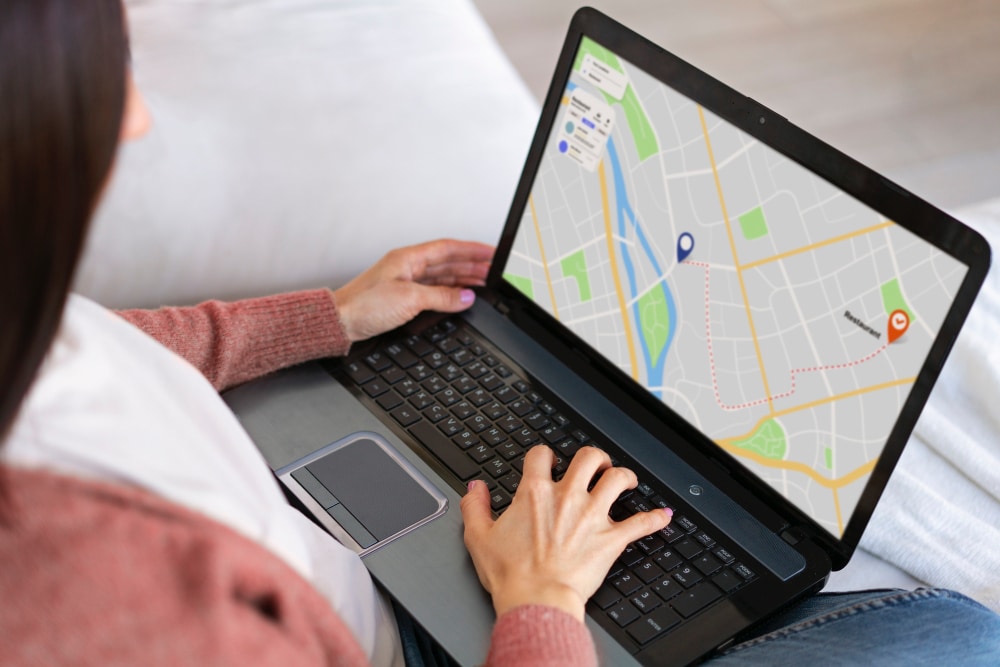
Google’s algorithms have become incredibly sensitive to locality. In the recent February 2026 updates, we saw a clear preference for locally relevant content. This isn’t just for “Pizza Near Me” searches; it’s affecting B2B and professional services as well.
Google is now prioritizing websites that demonstrate a physical and cultural connection to the user’s region. We call this the “Neighborhood Effect.” If your business is based in the U.S. and you are writing for a U.S. audience, Google is now giving you a distinct advantage over international “content farms” that used to dominate the global rankings.
The Tendency is clear: “Broad” keyword traffic being replaced by “High-Intent Local” traffic. You might see 1,000 fewer visitors from outside your service area, but those 1,000 visitors are being replaced by 200 visitors who are actually qualified to buy from you.
Why This Change Is Actually a “Green Light”
If your traffic feels lower, it is easy to assume something is broken. But Klik Digital looks for the “quiet engine” of growth. Across our projects, the quality of lead is actually increasing.
By filtering out the “noise” (users who were never going to convert, international bots, and casual browsers), Google is delivering a more concentrated stream of high-intent users to your doorstep. The “staircase” hasn’t disappeared; it has simply become more exclusive. To climb it, you need to stop focusing on the quantity of clicks and start focusing on the clarity of your authority.
The Klik Digital Checklist: How to Adjust Your Strategy
To navigate the 2026 shift, we recommend three immediate pivots:
- Humanize Everything: Remove “Admin” or “Staff” from your author bios. Put your experts front and center. Use real photos, real bios, and real professional links.
- Move Beyond Definitions: Stop writing content that an AI can summarize in a paragraph. Start writing about the complexity of your industry. Share your failures, your unique processes, and your “in-the-trenches” insights.
- Optimize for Interaction: Since “Discover” and AI-driven search are watching user behavior, your site speed and “Interaction to Next Paint” (INP) must be flawless. If a user clicks your site from a feed and it lags, you lose that “Trust Signal” instantly.
The digital landscape has moved past the era of SEO tricks. Today, your growth depends on a seamless blend of technical speed, human authority, and hyper-relevant content. If your marketing strategy is still running on 2024 rules, you might not be losing traffic or filtering out the wrong audience. Schedule a Comprehensive Online Presence Audit with Klik Digital today. Let’s adjust your strategy to meet the 2026 algorithm and turn your “surviving” traffic into “thriving” growth.
FAQ
You are likely experiencing the realignment. Google is getting better at not sending you “useless” traffic. The users you lost were likely people looking for quick definitions that AI now provides. The users you kept are the ones looking for a deep-dive expert. This is a sign of a healthier, more efficient marketing funnel.
Discover is a “push” medium, not a “pull” medium. It relies on high engagement. If you have a “spike” followed by a “cliff,” it usually means your headline was interesting enough to get the click, but your content didn’t keep the user’s attention long enough for Google to keep pushing it. Focus on “Stay Time” and internal engagement.
Yes, but the type of blog has changed. General SEO blogging is dead. Authority Blogging—where you provide original research, case studies, or specialized opinions—is the only way to rank in a world of generative AI.
Surprisingly, yes. We are seeing Google use “Local Trust Signals” (like your Google Business Profile and local citations) to verify that you are a legitimate entity. Even if you serve the whole country, being a “Verified Local Expert” in your home city provides a foundation of trust that helps you rank nationally.
