


Want to Rank in 2025? Writing for Humans and AI Chatbots
Subscribe to our newsletter
Keep up with the latest news in the digital marketing arena with Klik Digital. Subscribe Now!
The Myth of “Write for Humans” — Why It’s No Longer Enough
For years, SEO pros have repeated the mantra: “Just write for humans, and rankings will follow.” In 2025, that advice is only half the story. Google’s Search Generative Experience (SGE)/AI Overviews, ChatGPT, and Perplexity aren’t replacing human readers—but they are deciding which content humans see first.
That means your audience has two gatekeepers:
- Real people who expect value, clarity, and a connection.
- AI systems that extract, summarize, and highlight information—often before a click happens.
If your content doesn’t satisfy both, you’re invisible in this hybrid search world.
Understanding the AI-Search Hybrid Landscape
Today’s search is a cohabitation of traditional SERPs and AI summaries. A single query might show:
- Google SGE/AI Overviews delivering a color-coded snapshot with citations.
- ChatGPT pulling structured data to answer in a conversational tone.
- Perplexity blending concise summaries with clickable sources.
Here’s how it plays out:
A business owner searching “best invoicing tools for freelancers” gets:
- A familiar top ten list in traditional SERPs.
- An SGE overview comparing features, prices, and pros/cons—often sourced from just a handful of well-structured articles.
- ChatGPT summarizing the top contenders and even drafting a comparison table.
The takeaway? You’re not competing for a single spot—you’re competing for both the search page and the AI-generated answer box. That’s where SEO writing 2025 begins.

Writing for AI Crawlers: Structuring for Machines
AI crawlers aren’t magic—they rely on predictable patterns. When your content uses schema markup, clean heading hierarchies, and entity-rich language, it becomes machine-readable and machine-preferable.
Best practices:
- Schema markup: Use FAQ, How To, and Product schema where relevant.
- Headings: Keep H2/H3 concise and descriptive— “Cloud Backup vs. Cloud Sync” is more crawlable than “A Few Thoughts on Backup.”
- Entity density: Name people, brands, tools, and concepts explicitly. Saying “Google SGE” is more effective than simply referring to “this search tool.”
- Definitions: Embed clear, one-sentence definitions where possible. AI loves to lift these directly.
| SNIPPETS | |
| Before | After |
| Backups are important for keeping your files safe. | A cloud backup is a secure, remote copy of your files stored online, often encrypted, and updated automatically to prevent data loss. |
The “after” snippet gives an AI crawler the exact definition it needs—paired with context for human readers.
Writing for AI Summarizers: Fact-Rich and Scannable
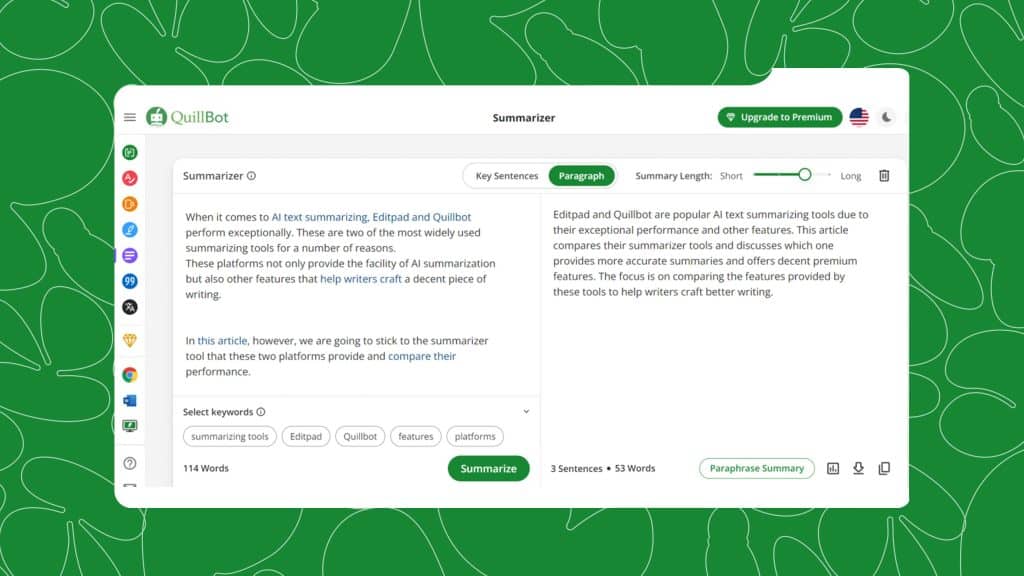
Generative engines thrive on precision and digestible chunks. Your goal is to make it effortless for an AI to extract accurate, complete sentences that stand on their own.
Tactics:
- Keep sentences concise and fact-based.
- Use subheadings to create natural breakpoints.
- Include small, self-contained statistics or timelines.
Example:
| AI Summarizers | |
| Before | After |
| Improving site speed helps users and can boost rankings. | Sites that load in under two seconds reduce bounce rates by 32% and are prioritized in both Google SGE/AI Overviews and traditional SERPs. |
Maintaining the Human Hook: Storytelling and Brand Voice
Humans still drive conversions, and they’re looking for more than sterile facts. Even in technical SEO topics, storytelling builds trust and keeps readers engaged long enough to convert.
Example of Optimization of Human Hooks
| Human Hooks | |
| Before | After |
| Marketing automation platforms increase lead conversion rates through email sequences, behavior tracking, and personalized content delivery. These tools integrate with CRM systems for comprehensive lead management. | Marketing director Sarah Chen watched her lead conversion rates jump from 12% to 28% after implementing HubSpot’s automation sequences. Marketing automation platforms increase conversion rates through email sequences, behavior tracking, and personalized content delivery—but Chen’s breakthrough came when she realized the tool’s CRM integration let her sales team follow up with context, not just contact information. |
In the first approach, the text provides a feature-focused explanation that, although it hits the mark, is generic. The optimized version not only hits the mark but drives with the benefit and provides a relatable story for the reader.
Your SEO content strategy 2025 should blend brand voice and data so that when AI summarizers quote you, the full article still delivers a richer, more persuasive story.
Content Formats AI Loves
Some formats naturally earn AI citations because they map well to generative responses:
- FAQs: Quick, authoritative answers feed AI summaries.
- How-tos: Step-by-step formats map directly into AI-structured answers.
- Comparison tables: Ideal for Perplexity and ChatGPT responses.
- Timelines: Useful for topics like “history of…” or “product roadmap.”
Example FAQ optimization:
| FAQs | |
| Before | After |
| Q: What is AI-first search? A: It’s search that uses AI. | Q: What is AI-first search? A: AI-first search is a search model where generative AI systems like Google SGE/AI Overviews and ChatGPT synthesize results from multiple sources, often displaying an AI-generated answer before showing traditional search listings. |
The “after” version gives AI systems complete, quotable sentences with specific entities (Google SGE, ChatGPT) while actually answering the human reader’s question with useful detail. The “before” version frustrates both audiences—AI can’t extract meaningful content, and humans get no real value, forcing them to search elsewhere.

LLM Optimization in Practice
Large Language Models (LLMs) don’t “think”—they predict the next word. Your content can influence that prediction.
Example LLM optimization:
| LLMs | |
| Before | After |
| Cloud costs can be unpredictable. | Cloud costs can fluctuate by 20–30% month-to-month due to usage spikes, over-provisioned resources, or vendor price changes—factors often cited in AI summaries comparing cloud providers. |
Cloud costs can fluctuate by 20–30% month-to-month due to usage spikes, over-provisioned resources, or vendor price changes—factors often cited in AI summaries comparing cloud providers.
The “after” version offers specific numbers and causal context, increasing the odds of being cited.
This is writing for AI search in action—directly feeding the structured, complete sentences AI systems prefer.
Common AI Optimization Mistakes to Avoid
Even with the best intentions, many content creators fall into traps that actually hurt their AI visibility. The temptation to “game the system” can backfire spectacularly when AI systems are designed to reward natural, helpful content.
Keyword stuffing for AI systems is perhaps the most common misstep. Writers assume that cramming “AI search optimization” into every paragraph will boost citations. Instead, AI systems flag repetitive language as low-quality. A client recently came to us after their traffic dropped 40% because they mentioned “cloud storage solutions” 15 times in a 600-word article. AI summarizers simply ignored the content entirely.
Over-relying on structured data without context creates another roadblock. Schema markup is powerful, but it’s not magic. We’ve seen sites implement FAQ schema on content that doesn’t actually answer the questions clearly in the body text. The result? AI systems pull the schema but can’t find supporting context, leading to incomplete or inaccurate citations.
Ignoring mobile optimization in AI-first environments is shortsighted. ChatGPT and Perplexity users are increasingly mobile, and AI systems factor loading speed and mobile readability into their source selection. If your content doesn’t render cleanly on mobile, you’re invisible to a growing segment of AI-driven searches.
Finally, creating content that’s too technical for AI to parse effectively limits your reach. While AI systems are sophisticated, they struggle with dense jargon, unclear pronoun references, and overly complex sentence structures. The sweet spot is content that’s authoritative but accessible—expert insights explained in plain language.

Avoiding Over-Optimization
Yes, you’re writing for machines, but overloading content with entities, markup, or AI-friendly phrasing can alienate human readers.
Rule of thumb: If it feels robotic when read aloud, dial it back.
Example of over-optimized content:
“Google SGE, ChatGPT, and Perplexity are AI summarizers. AI summarizers create AI summaries. AI summaries help in AI-first search optimization.”
Better:
“AI summarizers like Google SGE, ChatGPT, and Perplexity scan content for clear, authoritative statements they can cite—making precision and clarity your best optimization tools.”
The second version eliminates robotic repetition while delivering the same core information in a way that feels natural and actionable. Instead of mechanically repeating “AI summarizers” and “AI summaries,” it flows conversationally while still naming the key entities AI systems need. Most importantly, it transforms dry facts into practical insight—telling readers not just what these tools do, but how to succeed with them through “precision and clarity.” The over-optimized version reads like keyword spam and would likely be ignored by both AI systems and human readers.
Measuring Success
Ranking in 2025 means measuring more than SERP position. Your metrics should include:
· AI citation frequency (how often you’re quoted in AI summaries)
· Engagement metrics (time on page, scroll depth)
· Traditional rankings (still relevant for visibility)
· Conversions (because traffic without leads is just noise)
At Klik Digital, we monitor client performance across all these metrics, ensuring their AI-first search optimization works in harmony with human engagement.
The hybrid search landscape rewards content that speaks to two audiences: people and machines. Your generative engine optimization work ensures AI finds you; your storytelling ensures humans remember—and choose—you.
If you want to be visible in both SERPs and AI answer boxes, the time to adapt is now. The content that wins is entity-rich, fact-backed, and still human at its core.
Book your strategy session on Generative Engine Optimization and ramp up your content for more than humans!
FAQs
Writing for AI means creating content that serves both AI systems like Google SGE, ChatGPT, Perplexity and human readers. This involves using clear definitions, entity-rich language, structured formatting with schema markup, and fact-based statements that AI can easily cite while maintaining natural readability.
Focus on scannable, authoritative content with clear definitions, specific statistics, and structured formats like FAQs and comparison tables. Use schema markup, include entity names explicitly, and write complete sentences that can stand alone. For example, “cloud storage reduces data loss risk by 89% according to IBM’s 2024 study” works better than “cloud storage helps businesses.”
Keywords aren’t dead, they’ve evolved. AI systems like ChatGPT and Perplexity prioritize content that naturally incorporates related terms and entity names around core keywords rather than mechanical repetition. Context and semantic relationships now matter more than keyword density, making topical authority more valuable.
Schema markup helps AI systems understand your content’s structure and meaning. FAQ schema makes Q&As easily extractible, How To schema formats step-by-step content for AI responses, and Product schema provides structured data for comparisons. While it doesn’t guarantee citations, schema significantly increases AI comprehension and referencing accuracy.
Write naturally first, then optimize through editing. Add specific entities, clear definitions, and structured elements during revision. Use the “read aloud” test—if it sounds robotic, dial back. Example: “Marketing automation platforms like HubSpot increase conversion rates by 23%” reads naturally while giving AI systems citable data.
