


The 2026 Marketing Trends You Should Follow
Subscribe to our newsletter
Keep up with the latest news in the digital marketing arena with Klik Digital. Subscribe Now!
The year 2026 will not be an incremental update to your marketing strategy; it will be a pivotal year. Digital marketing has reached a point of convergence where Artificial Intelligence (AI), the evolution of search, and the final sunset of third-party cookies are colliding to create a radically new landscape. The competitive advantage is rapidly shifting from the biggest budget to the smartest, most adaptive strategy.
For CMOs, Marketing Directors, and growth teams, this means the rules are being rewritten for visibility, personalization, content production, and performance measurement. Successful brands are no longer reacting to these changes; they are planning now with an execution-ready framework.
Klik Digital helps transform these complex trends into clear, measurable strategies that drive real business results. Here are the top eight marketing trends that will define your success in 2026.
Why 2026 Is a Breakthrough Year for Marketing
The confluence of several forces is turning 2026 into a defining year for digital strategy:
Convergence of AI + Search + Personalization + Multichannel Performance
AI has evolved past a simple tool. It is now embedded across the entire marketing stack: generating content, summarizing search results, segmenting audiences, and automating campaign orchestration. This demands a holistic strategy where all channels are integrated and informed by the same data.
Audience Behavior Shifts Post-Cookie Era
With third-party tracking slacking off, audiences expect immediate value, authenticity, and hyper-relevance in exchange for their first-party data. Marketers who fail to build trust and deliver contextual experiences will struggle to connect and measure performance.
Creativity + Data = Competitive Advantage
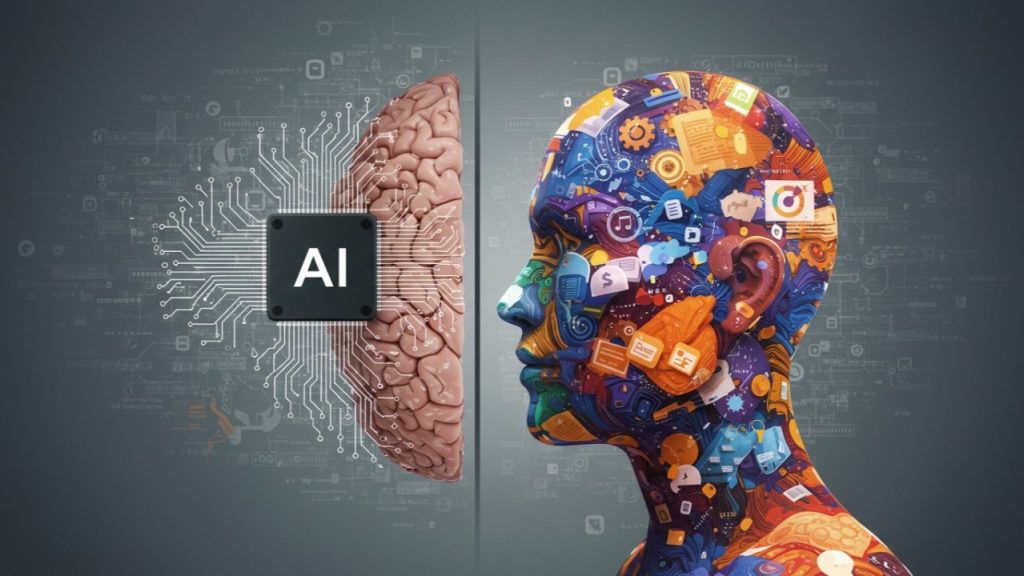
As AI accelerates content volume, the ability to create truly differentiated, human-centric, and emotionally resonant messaging becomes paramount. The winning equation in 2026 is: Unwavering Creativity fueled by Precise Data.
Trend #1. AI-First Marketing Strategies Take Center Stage
AI is no longer a bolt-on feature; it is the infrastructure for efficiency, scale, and personalization.
- AI for Content Ideation, Generation, and Optimization: AI tools will be integral for generating content outlines, initial drafts, and, critically, optimizing existing content for search algorithms and audience preferences. Over half of marketing teams are already using AI to optimize their content.
- Generative AI for Outlines, Drafts, and Adaptive Variations: Use AI to handle the volume and consistency, freeing human experts to focus on the unique insights and brand voice.
- Search Engine and Social Algorithm Shifts Using AI Signals: Algorithms will prioritize content that is clear, authoritative, and easily interpreted by Large Language Models (LLMs).
- Quality Guardrails and Brand Consistency with AI: Smart marketers will implement governance—clear prompt frameworks, review processes, and brand-specific AI agents—to ensure output is accurate, ethical, and strictly on-brand.
- Personalization at Scale Through Predictive Analytics: AI enables the hyper-personalization of content, ads, and product recommendations at a scale that human teams cannot match, connecting with micro-communities using context-specific messages.
Trend #2. Search Gets Redefined Beyond Traditional SEO
The concept of “ranking #1” on Google’s traditional blue links is becoming outdated. Search is expanding into an AI-powered, answer-driven experience.
- Search Isn’t Just Keywords Anymore: We are moving into the era of Generative Engine Optimization (GEO) and Answer Engine Optimization (AEO). Visibility means getting your brand cited and summarized by AI Overviews, ChatGPT, and other conversational interfaces.
- ChatGPT/AI Search Result Inclusion Strategies: Focus on being the most definitive, well-structured, and authoritative source for a topic. AI systems reward content that is transparent, expert-led (E-E-A-T), and trusted.
- Structured Content, Entity Optimization, and Semantic Strategies: Ensure your site architecture clearly defines who you are, what you offer (entities), and the semantic relationship between your content pieces. This clarity feeds directly into LLMs for accurate summarization.
- Video + Visual Search Optimization: Multimodal search (using images, audio, and video) is growing. Ensure video transcripts and descriptive alt text for images are optimized, making your content discoverable across all sensory inputs.
Trend #3. Video Becomes the Core Content Medium
Video is now the primary language of engagement for modern consumers, especially on mobile.
- Short and Long-Form Video Working Together: Vertical short-form video (TikTok, Reels, Shorts) captures attention and drives awareness. Longer-form content (YouTube, webinars) builds trust and guides conversion.
- Vertical Storytelling and Platform-Native Formats: Mobile-first, vertical video is mandatory. Marketers must master platform-native formats and cues (e.g., using trending audio, quick cuts) to interrupt the scroll and maximize attention.
- Repurposing Long-Form into Micro-Clips: The most efficient video strategies use long-form content as the source, building scalable systems to atomize it into dozens of micro-clips for daily social distribution.
Trend #4. Personalization Moves to Micro-Moments
Generic segmentation is dead. Personalization in 2026 is about delivering the exact right message at the exact right moment in the customer journey.
- Contextual Journeys, Not Static Segments: Marketing automation must be driven by real-time behavioral data (e.g., website activity, recent purchases) rather than just demographic groups.
- Behavioral Triggers Driving Automation: Use high-intent actions—like visiting a specific pricing page or downloading an asset—as triggers for highly targeted, automated email sequences or ad retargeting.
- CRM and First-Party Data Maturity: The foundation for this micro-moment strategy is a robust, clean CRM and a mature First-Party Data infrastructure (see Trend #5) that unifies customer data from every touchpoint.

Trend #5. Data Cleanliness and Infrastructure Become Competitive Edges
As third-party cookies fade, proprietary, permission-based data is the most valuable asset. The quality of your data will directly dictate the accuracy of your targeting and measurement.
- First-Party Data Supremacy Post-Cookie: Strategies must focus on consent-driven data collection (zero- and first-party data) that captures explicit customer preferences and behaviors.
- Unified Data Layers for Advanced Segmentation: Brands must move beyond siloed data (CRM, email platform, website analytics) to a unified customer data platform (CDP) or similar framework. This provides a single, 360-degree view of the customer for advanced segmentation.
- Measurement Accuracy and Governance: Marketers must adopt privacy-first measurement strategies and leverage mixed attribution models in platforms like GA4, acknowledging that single-click attribution is a relic of the past.
Trend #6. Omnichannel Integration Is Table Stakes
Consumers move fluidly between channels. If your messaging or offer changes between an email, a social ad, and a website landing page, you create friction and lose trust.
- Messaging Continuity Across Social, Search, Email, and Web: Your brand’s voice, key message, and campaign offer must be identical and seamless across every touchpoint.
- Channel Orchestration and Budget Alignment: Strategies must define clear roles for each channel (e.g., Paid Social drives new users; Email nurtures; SEO validates) and budget allocation must reflect these strategic roles, ensuring channels complement, rather than compete, with one another.
- Intent Signals Across Touchpoints: Use data from one channel (e.g., high engagement on a LinkedIn post) to trigger a personalized action on another channel (e.g., a relevant follow-up email).
Trend #7. Performance Creativity Wins
In an AI-saturated market, creative elements—the headline, the visual, the emotional message—drive the majority of performance impact.
- Creative Testing as Part of Performance Cycles: Creative development must be treated like a science. Teams must use rapid, systematic A/B testing frameworks to constantly validate and iterate on creative concepts.
- Data-Informed Messaging Iterations: Use AI and analytics to identify which creative elements (color, tone, message length) drive the best engagement and conversion, then feed those insights back into the creative process.
- ROI Measurement on Creative Elements: Modern analytics allow marketers to measure the performance contribution of specific visual or textual elements, not just the overall campaign.

Trend #8. Community & Trust Become Brand Amplifiers
As consumers become wary of AI-generated content and ad noise, genuine human connection and social proof are the most powerful accelerators of growth.
- UGC, Micro-Influencers, and Brand Ecosystems: User-Generated Content (UGC) and partnerships with niche, trusted micro-influencers are highly effective because they feel authentic and non-commercial.
- Social Proof as a Core KPI: Track and optimize for customer reviews, testimonials, case study engagement, and third-party brand citations. Search engines increasingly view them as strong signals.
- Trust + Transparency Signals: Be transparent about how you use data and how your products are made. Human-first content—content written or edited by verified experts with clear credentials—builds essential credibility.
How Smart Brands Are Planning for These Trends This December
Successful brands are already dedicating resources to pre-2026 strategic actions:
- Early Audits, Strategy Workshops, Tech Alignment: Conducting comprehensive audits of current content for AI-readiness, holding cross-department workshops to align on 2026 strategy, and confirming technology stacks support first-party data capture.
- KPI Redefinition for 2026: Shifting measurement focus from vanity metrics (like raw organic traffic) to quality metrics (like branded search volume, AI citations, conversion-qualified clicks, and video engagement rates).
- Cross-Department Planning: Ensuring SEO, Content, Paid Media, CRM, and Analytics teams are working from the same playbook, with shared goals for AI adoption and data usage.
Klik’s Framework for 2026 Marketing Success
Navigating these shifts requires strategic planning that is both vision-driven and executable. Klik Digital provides the integrated framework to capitalize on the 2026 pivot:
- AI + SEO + Creative + Data + Measurement: We don’t treat these as separate silos. Our approach integrates AI readiness into your SEO strategy, aligns creative output with data-driven insights, and builds robust, privacy-first measurement systems.
- Strategy → Execution → Measurement → Iteration: We help you build the systems, train your teams on the new processes (like Generative Engine Optimization), and provide continuous oversight to ensure your strategy delivers sustainable growth.
- How Klik Operationalizes These Trends: We specialize in moving beyond theory to implementation, building AI content governance, deploying CDP solutions, developing video content systems, and unifying your omnichannel reporting.
Don’t just read about the 2026 shift—master it. We compiled all the must-know trends for Digital marketing strategy, Growth marketing, SEO, email marketing, web site development, design, and many more into one definitive resource.
Download our newest eBook: The 2026 Marketing Shift: Trends That Will Define a Yearand get the full strategy guide explained by Klik Digital experts.
FAQs
The most critical trends are the AI-First Strategy (using AI for scale and personalization) and the Search Redefinition (optimizing for AI Overviews and answer engines/GEO). These two trends fundamentally change how customers discover and interact with your brand.
Small businesses can compete by prioritizing authenticity and niche expertise. AI struggles with deep, personal, human expertise and hyper-local knowledge. Focus on human-first content, clear brand messaging, and leveraging AI tools for efficiency (drafting, repurposing) rather than trying to match the content volume of larger enterprises.
Primarily, they require new processes and skills. While new tools (CDPs, specialized AI agents) are helpful, the biggest barrier is often organizational: teams need new workflows for AI governance, a shift in mindset for SEO (moving to AEO/GEO), and cross-functional alignment on data usage.
Klik provides strategic consultation, technology implementation, and managed services. We help companies define their AI governance framework, execute a First-Party Data maturity roadmap, build scalable video content systems, and establish the KPIs and dashboards necessary to measure success in the new AI-driven, omnichannel environment.
